Sub-Total: $0.00

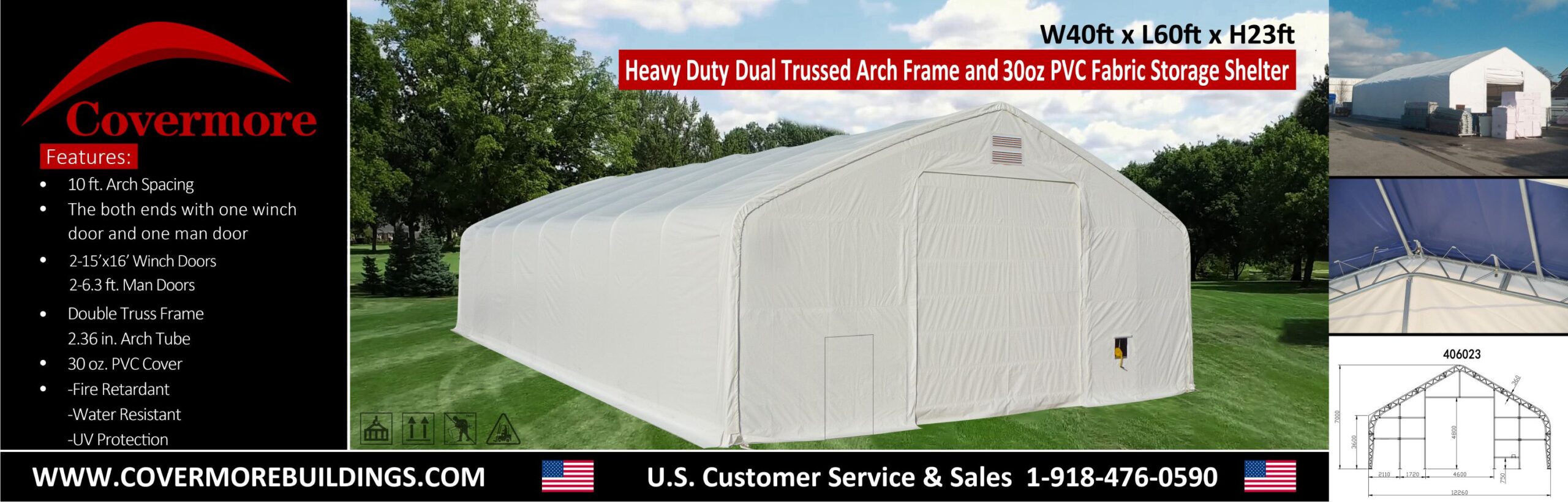
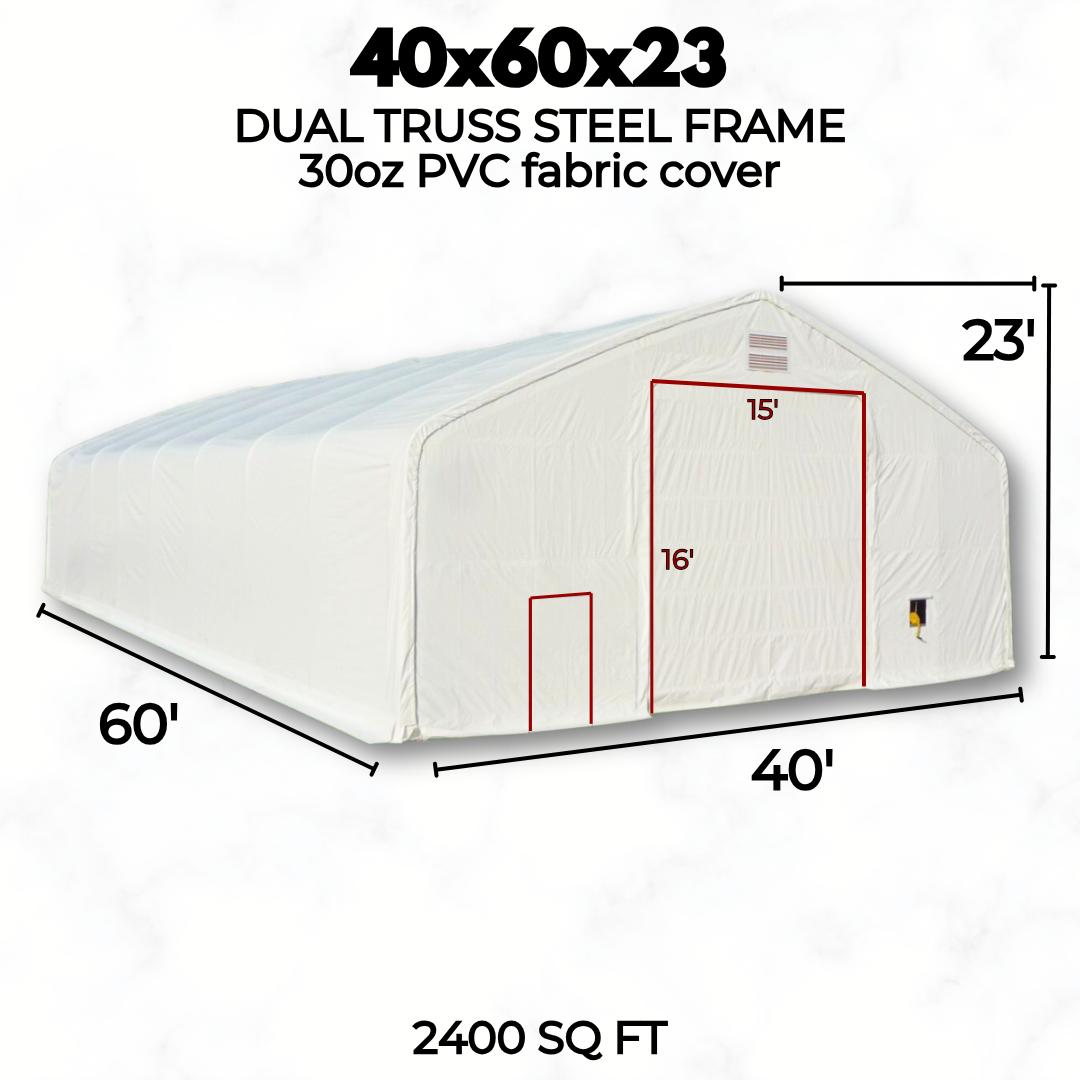
40x60x23 30 oz PVC Dual Truss Fabric Building- NEW!
$16,000.00
Description
**New Model in Stock Now!**
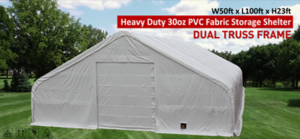
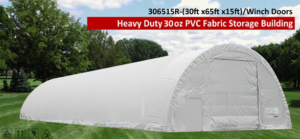
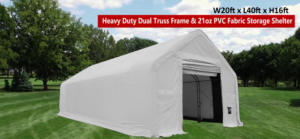
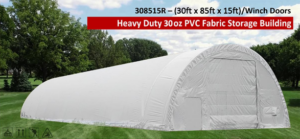
Heavy Duty PVC Dual Truss Fabric Building
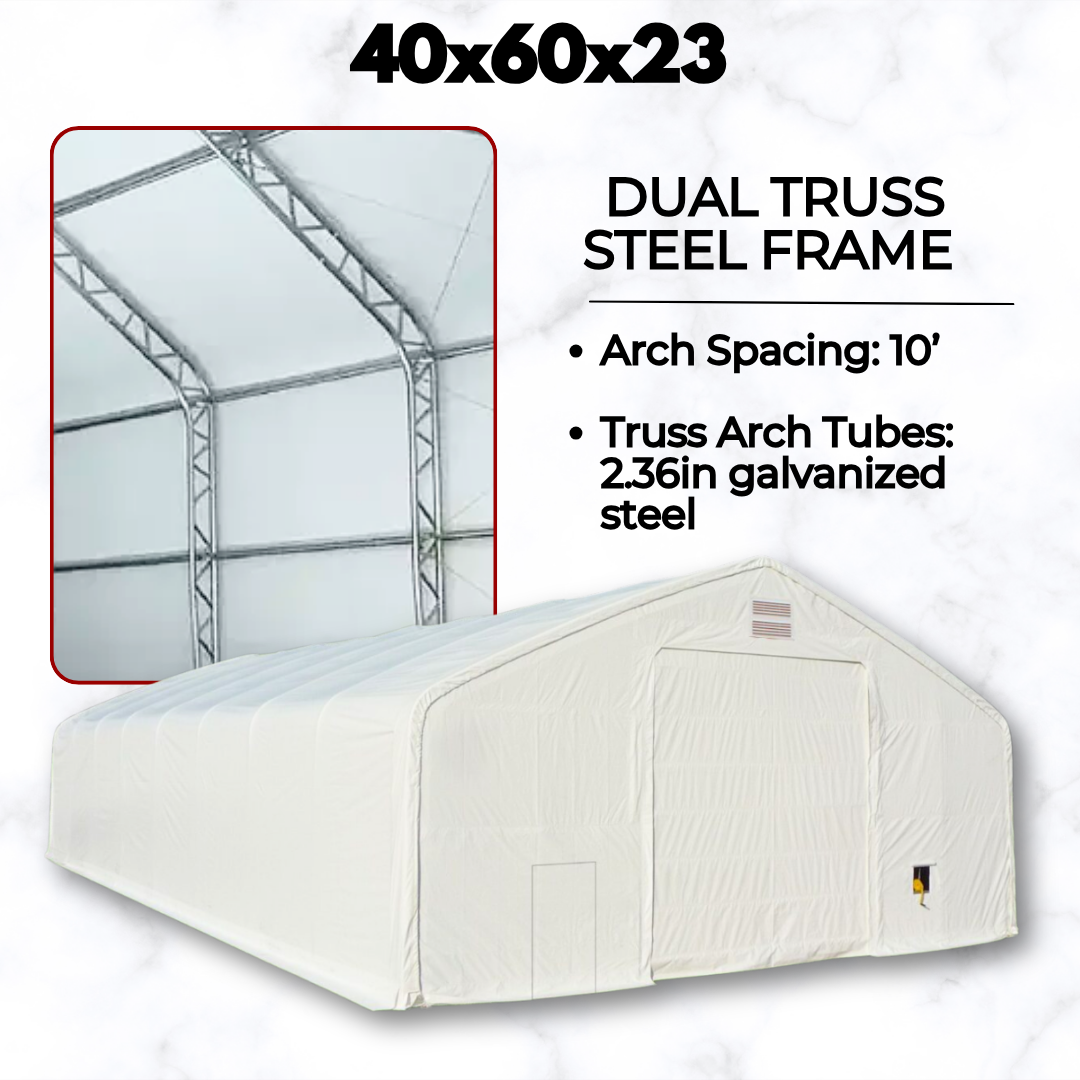
40 x 60 x 23 – Dual Truss Galvanized Steel Frame
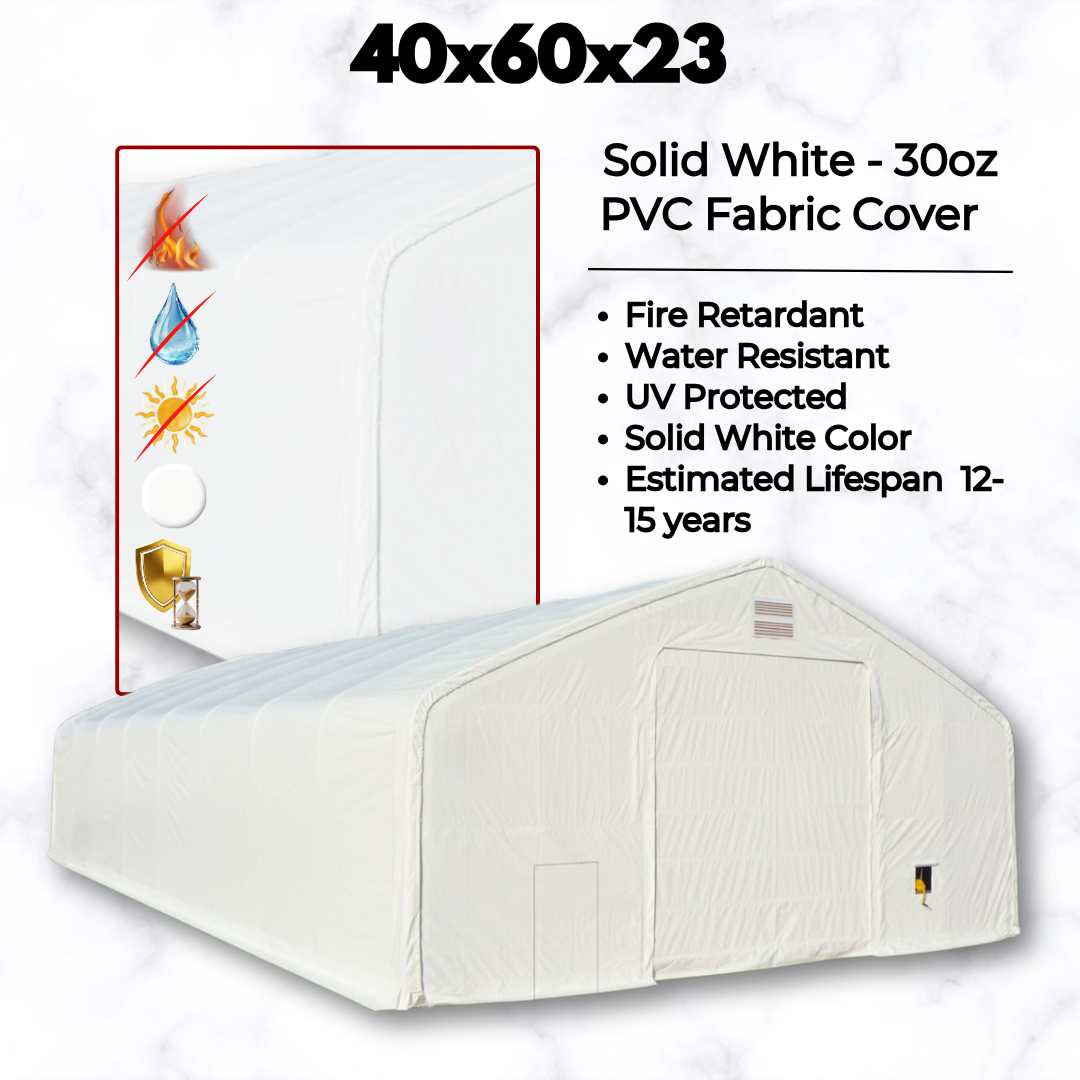
Solid White, 30 oz PVC Fabric Cover
15 x 16′ Winch + Man Doors on Both Ends
Features:
- Model: 40’W x 60’L x 23’H PVC Dual Truss Fabric Building
- Arch Spacing: 10’
- Dual Truss Frame
- Truss Arch Tubes: 2.36 in. galvanized steel
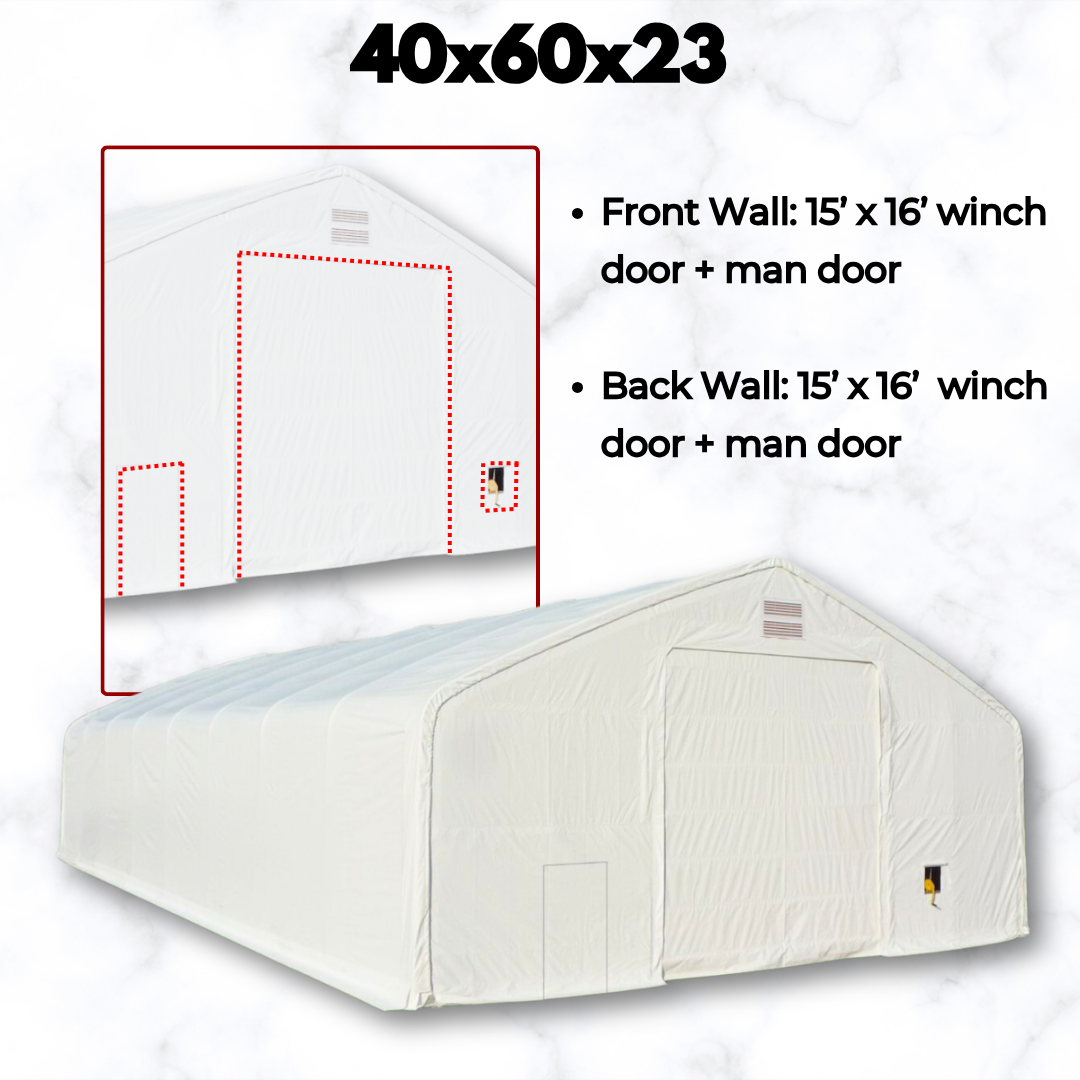
- Front Wall: 15’ x 16’ winch door + man door
- Back Wall: 15’ x 16’ winch door + man door
- All parts pre-drilled for easy assembly
- Ratchet strap system secures the ground bars to the footplates
- Cover: 30 oz PVC
- fire retardant
- water resistant
- UV protected
- solid white color
- estimated lifespan 12-15 years
PE vs PVC fabric and why we choose PVC for our Dual Truss Fabric Building:
Both (PE) polyethylene and PVC are waterproof, but PVC is more so. Additionally, PVC is much more fire-resistant than polyethylene because the chlorine atoms it releases during a fire inhibit the process of combustion. Poly vinyl (PVC) is made from the polymerizing of vinyl chloride monomer. Additional stabilizers and plasticizers are added to increase its light and heat resistant properties and increase its elasticity.
These properties make PVC suitable for various industrial applications. PVC fabric is durable and designed to last a long time. PVC fabric is thicker than PE fabric, weighing between 20-28 ounces psf. Compared to PE, PVC fabric has a higher tear strength, making it a popular choice for fabric buildings that are exposed to high UV rays, strong winds and other extreme conditions.
PE fabric is a lighter type of architectural fabric, commonly weighing 12 to 15 ounces psf, with a shorter lifespan than PVC. PE fabric does self-clean very well when it rains and it is about 5% more light translucent than PVC.
Solid White Cover and Why It’s Important:
The solid white cover is very important because the dyed ends (usually green) that you see on some tension fabric buildings is a weak point in the cover. The dyed ends do not have the same ability to withstand UV rays as the undyed white fabric.
We have received report after report from previous owners of hail penetrating the colored ends, but not the main white part, reports of the cover tearing at the seam where it transitions to the dyed end, and we have personally noticed excessive fading which can lead to premature failure of the cover.
Shipping:
The shipping Fee is $1,695
There is a flat rate of $1,695 for shipping this item via flatbed to a location with a forklift or equivalent to unload.
Common Uses:
Our dual truss fabric buildings have a variety of uses such as: RV/ vehicle garage, equipment & machining storage, sports & recreation, and aviation. Other uses include: environmental, government, hospitality & conventions, manufacturing, job site warehouse, agricultural, animal shelter, mineral storage, mining, oil & gas, part and warehouse storage.
Also referred to as:
Our dual truss fabric buildings are often called high tunnel or coverall. They get their name “High Tunnel” because they resemble a large tunnel for storing larger objects such as vehicles, airplanes, boats, tractors, and RV’s.
They get their name “Coverall” because they do just that. They cover all of your belongings to protect them from weather as well as allowing you to feel a sense of security knowing your projects, tools and equipment are well protected and hidden.
Common uses:
This larger size and heavy duty fabric building is commonly used for agriculture, alternative barn or equestrian arena space, farm equipment storage, landscape business equipment, and a huge variety of general storage and shelter needs!
See other available dual truss fabric buildings, hoop buildings and container shelter options on our shop page or eBay store front! Covermore Shelters Inc. | eBay Stores
Contact the office for more information at (918) 476-0590.
For more information on our fabric structures see our FAQ page. Tension Fabric Building FAQ | Covermore Buildings